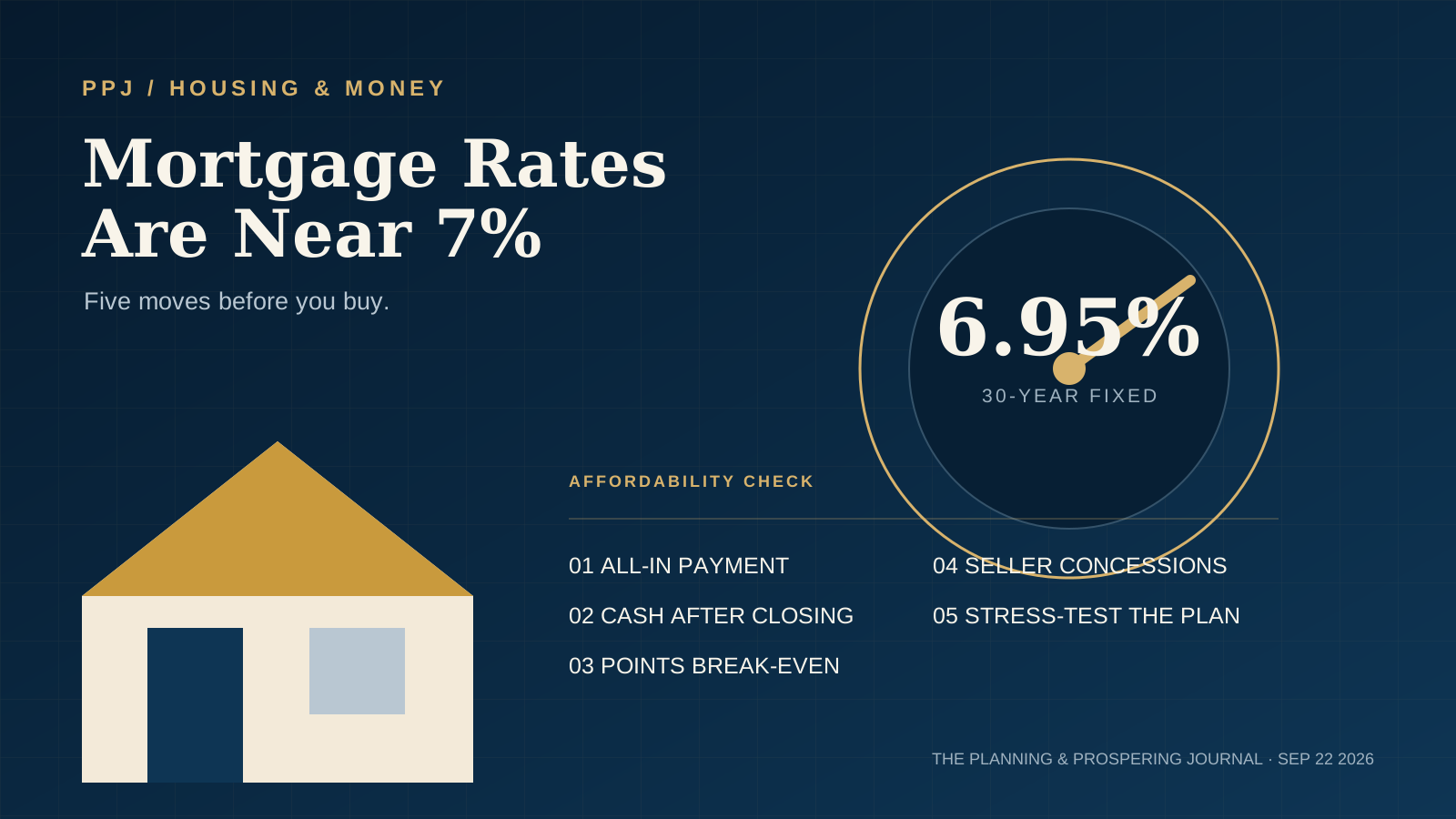
Mortgage rates are knocking on 7% again. Freddie Mac reported that the average 30-year fixed mortgage reached 6.95% on September 17, up from 6.76% a week earlier and 6.26% a year ago. For buyers already dealing with elevated home prices, that change can materially alter the monthly payment.
The timing is notable. One day earlier, the Federal Reserve raised its target range for the federal funds rate by a quarter point to 3.75% to 4.00% as it continued to confront elevated inflation. Mortgage rates do not move one-for-one with the Fed, but both developments reinforce the same message for households: borrowing assumptions need to be current.
1. Recalculate the Payment Before You Recalculate the House
A rate change can make the same purchase price more expensive without changing the listing by a dollar. Before deciding that a home is still in range, rerun the payment using today's realistic mortgage quote rather than the rate from a preapproval issued weeks ago.
Then add the costs that do not appear in the principal-and-interest number: property taxes, homeowners insurance, mortgage insurance when applicable, association dues and a reasonable maintenance allowance. The all-in payment is the number that has to coexist with groceries, childcare, transportation, insurance, saving and investing.
If the purchase only works when you assume a future refinance, lower taxes than the current estimate or no meaningful home repairs, the margin may be too thin.
2. Separate the Down Payment From the Cash You Need After Closing
Putting more down can reduce the loan balance and monthly payment. But draining cash reserves to reach a larger down payment can create a different problem on day one of homeownership.
Closing costs, moving expenses, repairs and ordinary life do not disappear after settlement. Keep an emergency reserve appropriate to your household and identify a separate amount for near-term home costs. The strongest offer is not necessarily the one that leaves you with the least cash.
3. Compare the Cost of Points, Not Just the Lower Rate
Discount points allow a borrower to pay more upfront in exchange for a lower mortgage rate. Whether that trade makes sense depends on the upfront cost, the monthly savings and how long you expect to keep the loan.
Calculate the break-even period: divide the upfront cost of the points by the monthly payment savings. If the break-even is five years but you reasonably expect to move or refinance sooner, paying the points may not deliver the benefit the lower rate suggests.
4. Treat Seller Concessions as a Financial Tool
In a slower market, the best negotiation may not always be a lower headline price. Depending on the transaction and loan rules, a seller concession can help with allowable closing costs or a rate buydown and may preserve more of your cash.
Compare scenarios in dollars. A price reduction, closing-cost credit and rate buydown can have very different effects on the cash required at closing and the monthly payment. Ask your lender and real-estate professionals to show the alternatives side by side.
5. Stress-Test the House Against the Rest of Your Plan
A lender's approval answers whether a loan meets underwriting standards. It does not answer whether the payment supports your priorities.
Run the new housing cost through the rest of your financial life. Can you still build emergency savings? Capture an employer retirement match? Pay insurance premiums? Handle childcare or tuition? Absorb a car repair without reaching for a credit card?
A home can be affordable to the lender and still be too expensive for the life you are trying to build.
Why Waiting for the Fed Is Not a Complete Strategy
Mortgage rates are influenced heavily by longer-term bond yields, inflation expectations and market conditions. That is why a Fed decision does not translate directly into an identical move in 30-year mortgage rates.
The better approach is to make the decision work under current conditions. If rates later fall and refinancing is financially worthwhile after fees and break-even analysis, that can become an option rather than a requirement.
What Buyers Should Watch Next
Freddie Mac's weekly mortgage survey is a useful benchmark, but your actual quote will depend on factors including credit profile, loan type, down payment, points, property and lender pricing. Compare multiple written loan estimates on the same day when possible so market movement does not distort the comparison.
Also watch the gap between what sellers are asking and what buyers can finance. Higher rates can create negotiating leverage in some markets, but local supply still matters. National headlines should inform the conversation, not replace local math.
The Bottom Line
A 6.95% average 30-year mortgage is not a universal signal to buy or wait. It is a signal to sharpen the decision.
Recalculate the all-in payment. Preserve cash after closing. Price points by their break-even period. Compare concessions. Then test the house against the rest of your financial plan.
The right home is not just the one you can close on. It is the one you can continue to afford after the excitement of closing is over.
Editorial note: This article is general financial education, not individualized lending, investment, tax, legal or financial advice. Mortgage terms and eligibility vary by borrower and lender.